Magento
engineering
notes



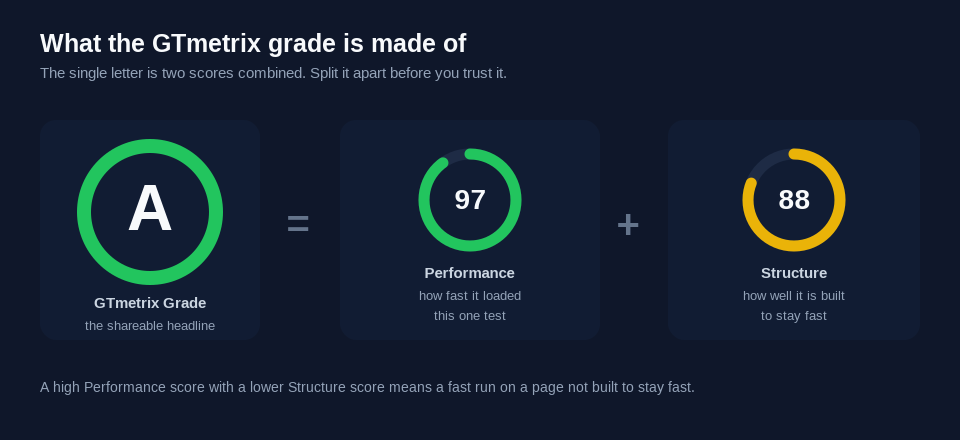

Not sure which platform risks deserve attention first?
Answer 15 operational questions and get separate risk and evidence-confidence scores, seven domain results, and a prioritized list of what to verify next. No email is required.
Check your platform healthThe index
All 86 articles, newest first. Pick a topic to narrow the list.
Every article, newest first
86 articles across 5 topics. Pick a topic on the left to narrow the list.

Magento Session and Cookie Configuration Health
Random logouts and lost carts are usually session or cookie configuration, not code. Here is where sessions should live and the settings that break logins.
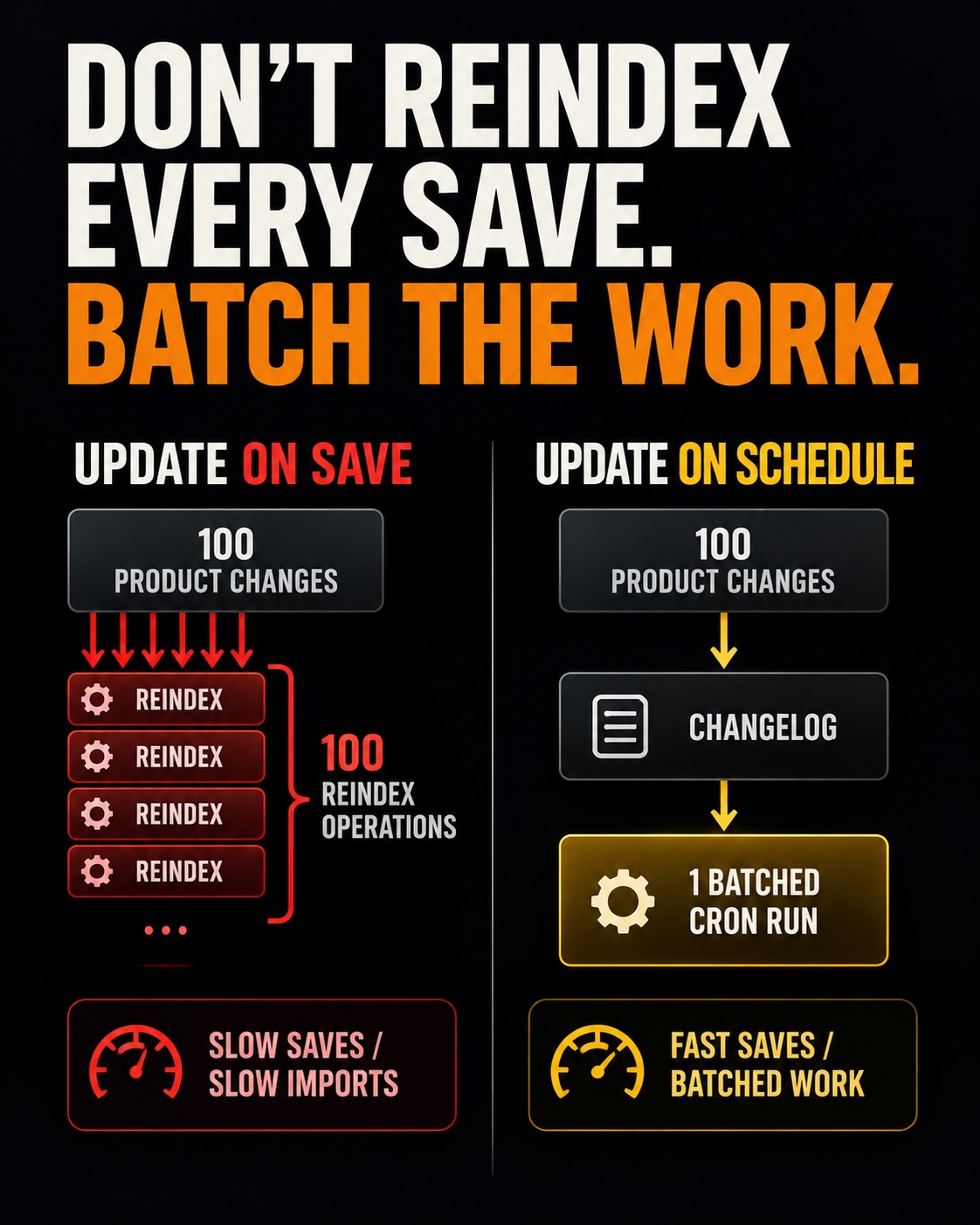
Magento Index Management: On Save vs On Schedule
Indexing decides whether the storefront tells the truth. Here is how indexers work, when to use update on save versus schedule, and how to keep them healthy.

Recurring Magento Memory Exhaustion Patterns
Memory fatals that recur are a pattern, not an accident. Here is where the errors land, the shapes they take, and why raising memory_limit is not the fix.
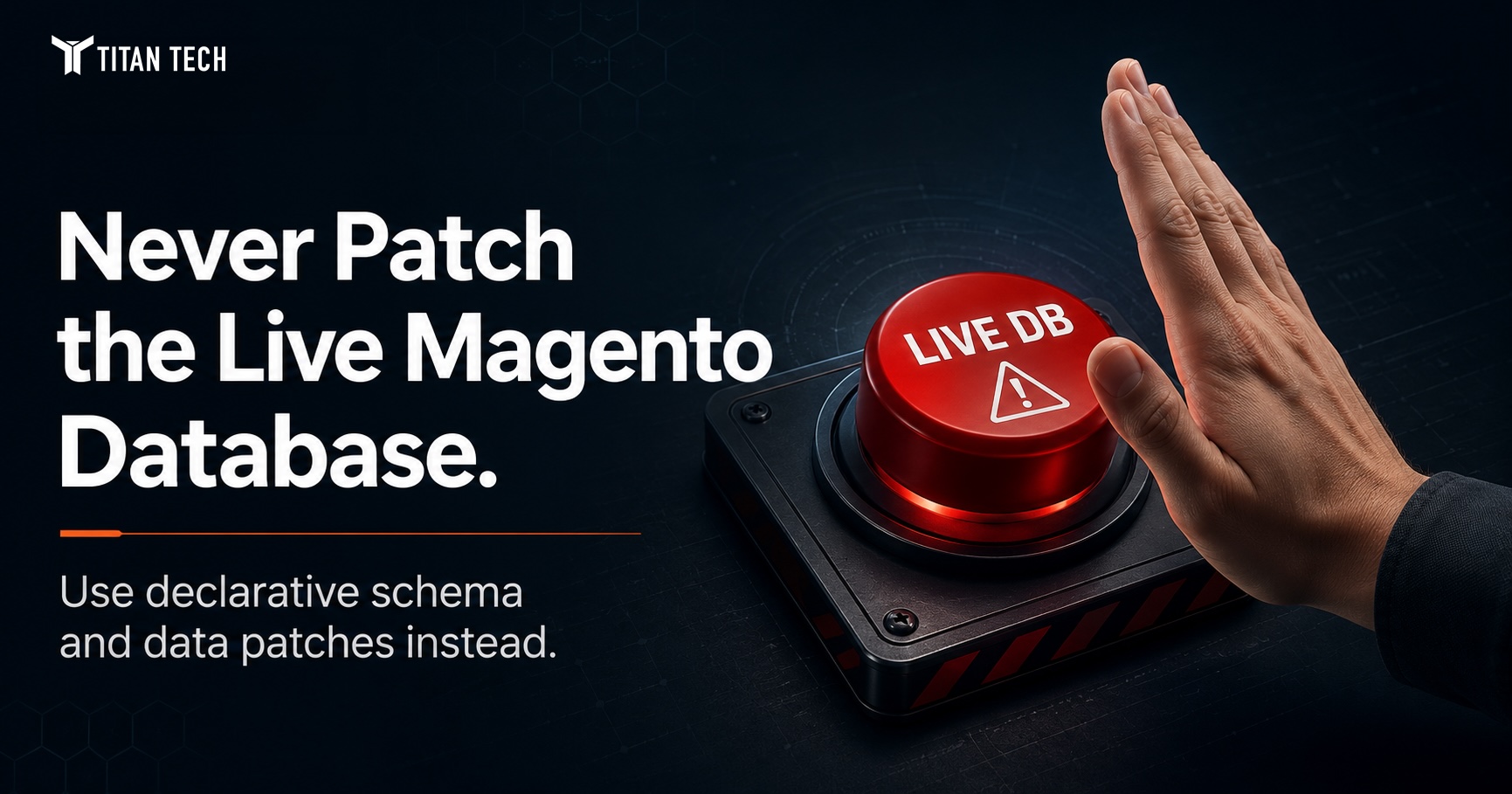
Never patch a live Magento database: use declarative schema and data patches instead
Direct production database edits create environment drift, investigation cost, and deployment risk. Use declarative schema and patches to keep Magento changes reviewable and repeatable.

Magento 2 indexing: when "Update on Schedule" falls behind
Scheduled indexing is often the right Magento configuration. But when cron-managed index work falls behind production change, stale data and resource pressure can become customer-facing risk.
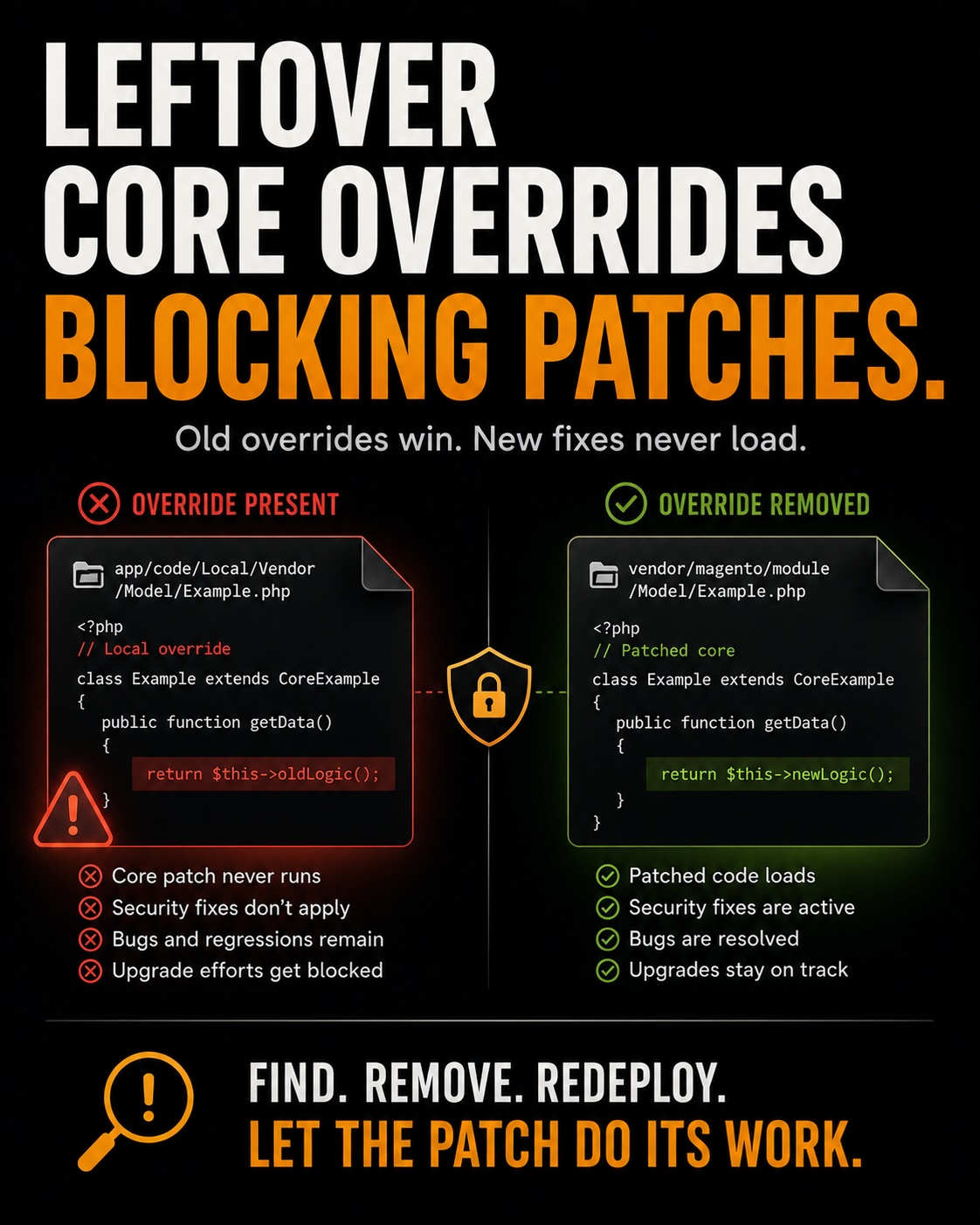
Core Overrides That Block Security Patches
A patch you applied may not protect you if an override runs instead of the fixed code. Here is how overrides neutralize patches and how to verify coverage.

Magento Version Alignment with Adobe's Matrix
"Running 2.4" is not a version. Here is how to confirm your exact Magento release, its support status, and whether every component sits inside the matrix.

Magento env.php and Config Path Integrity
env.php overrides the admin and holds the encryption key, yet is rarely reviewed. Here is what it controls and how config precedence actually works.

Magento 2 search: three hidden problems behind bad results and slow autocomplete
Magento search can return results and still be failing customers. Review the search engine, index configuration, and query/autocomplete behavior behind product discovery.

Magento 2 checkout: why mutating the quote inside an observer creates production risk
Observers are a valid Magento extension mechanism. But when custom logic silently mutates quote state during checkout, small shortcuts can become intermittent totals, promotion, shipping, and order-placement failures.

Magento Theme and Module Layout XML Conflicts
Layout XML from themes and modules can conflict, breaking pages in confusing ways. Here is how conflicts arise, the symptoms, and how to trace them.
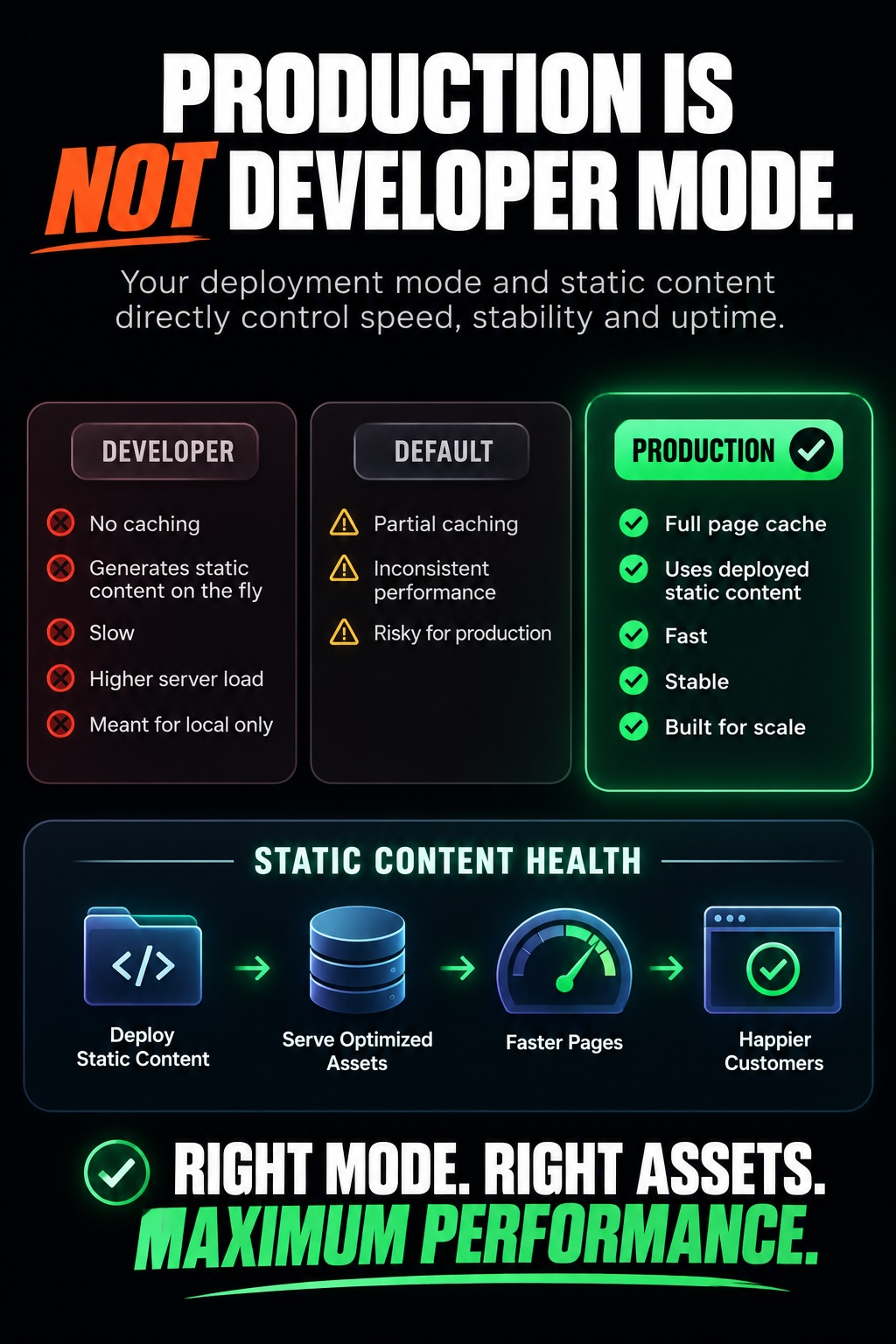
Magento Deployment Mode and Static Content Health
A production store in developer mode recompiles on every request. Here is how to check deploy mode and keep static content from breaking after a deploy.

The Real Cost of Leaving Magento Logs Uncleaned
Uncleaned logs cost more than disk: hosting, backup windows, outage risk, and buried errors. Here is what the habit actually costs and why prevention is cheap.
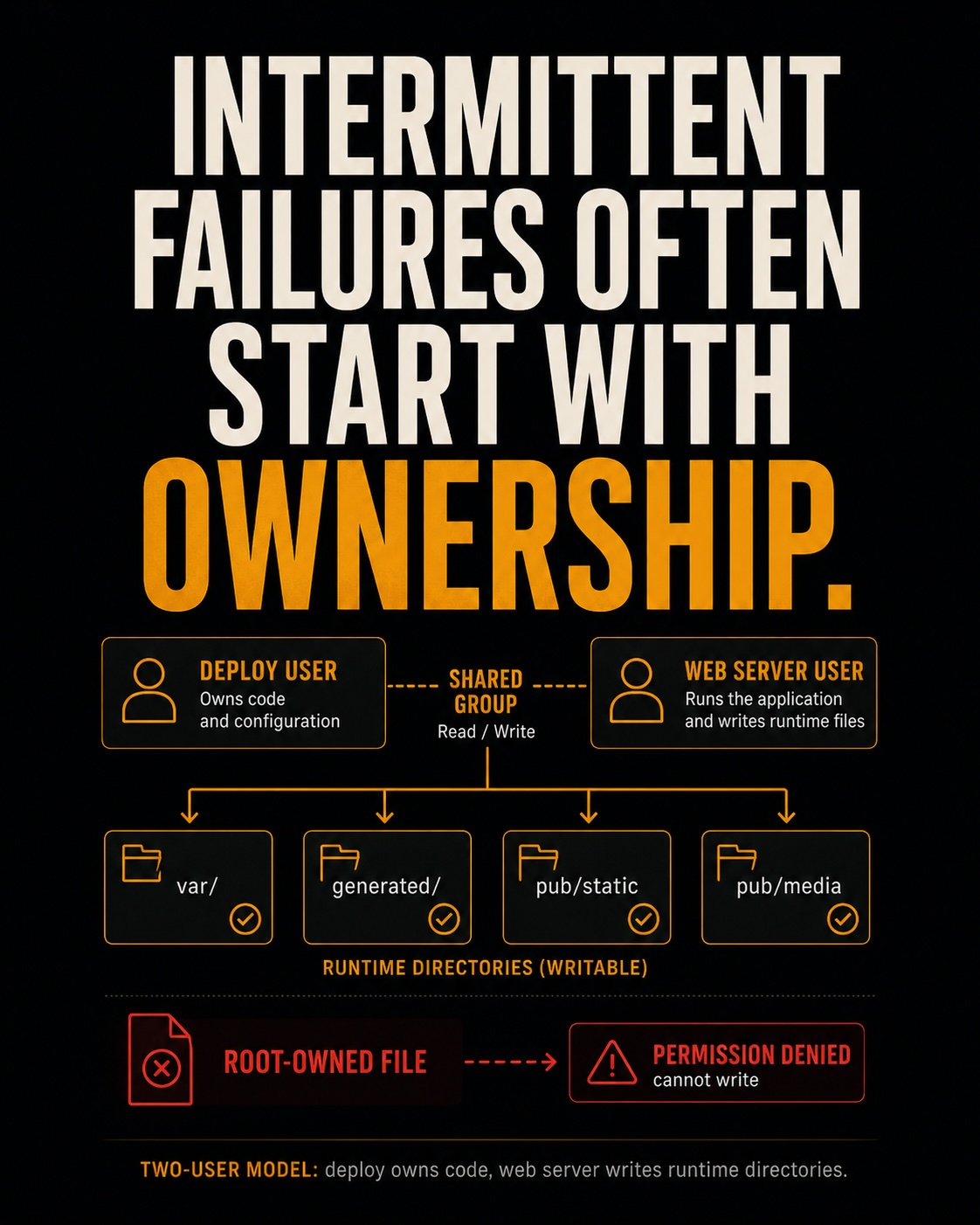
Magento File Permission and Ownership Failures
Ownership problems cause intermittent Magento failures that fool teams for hours. Here is the two-user model, the writable directories, and how to diagnose it.

Magento TTFB performance: how CDN, Varnish, and Redis reduce origin work
TTFB shows how long customers wait before a Magento response begins. CDN delivery, Varnish, and Redis or Valkey can reduce origin work when measured correctly.

Magento Database Bloat: Tables That Grow Without Limit
Magento never prunes most log, report, session, and quote tables. Here is how to find the tables eating your database, measure growth, and clean them safely.

Magento Extension Conflicts That Surface Under Load
Some extension conflicts pass QA with one user and only break under load. Here is how concurrency exposes lock and deadlock contention, and how to find it.

Magento Database Tuning: The Buffer Pool and Beyond
Magento is database-heavy, and most stores run near defaults. Here is how to size the InnoDB buffer pool and tune the settings that matter, on evidence.

Reading Magento Logs for Recurring Failure Patterns
A single Magento error is noise. The same one repeating is signal. Here is how to rank exception and system logs by frequency and find the real defects.

From Ad-Hoc Fixes to Scheduled Health Review
Ad-hoc fixes keep a store alive, not healthy. Here is the case for treating platform health as scheduled work, and what a regular review actually covers.

Database Query Patterns That Reveal Technical Debt
The slow query log names your database debt directly. Here is how to capture it, read a query plan, and spot N+1 loads, EAV joins, and missing indexes.

EAV Attribute Debt That Slows the Catalog
Every product attribute has a running cost in reads, writes, and indexing. Here is how EAV debt slows the catalog and how to measure and reduce it.

How to Score Your Own Magento Store Health
Most owners learn their store was unhealthy the hard way. Here is a self-audit that scores performance, stability, security, and more before an outage does.
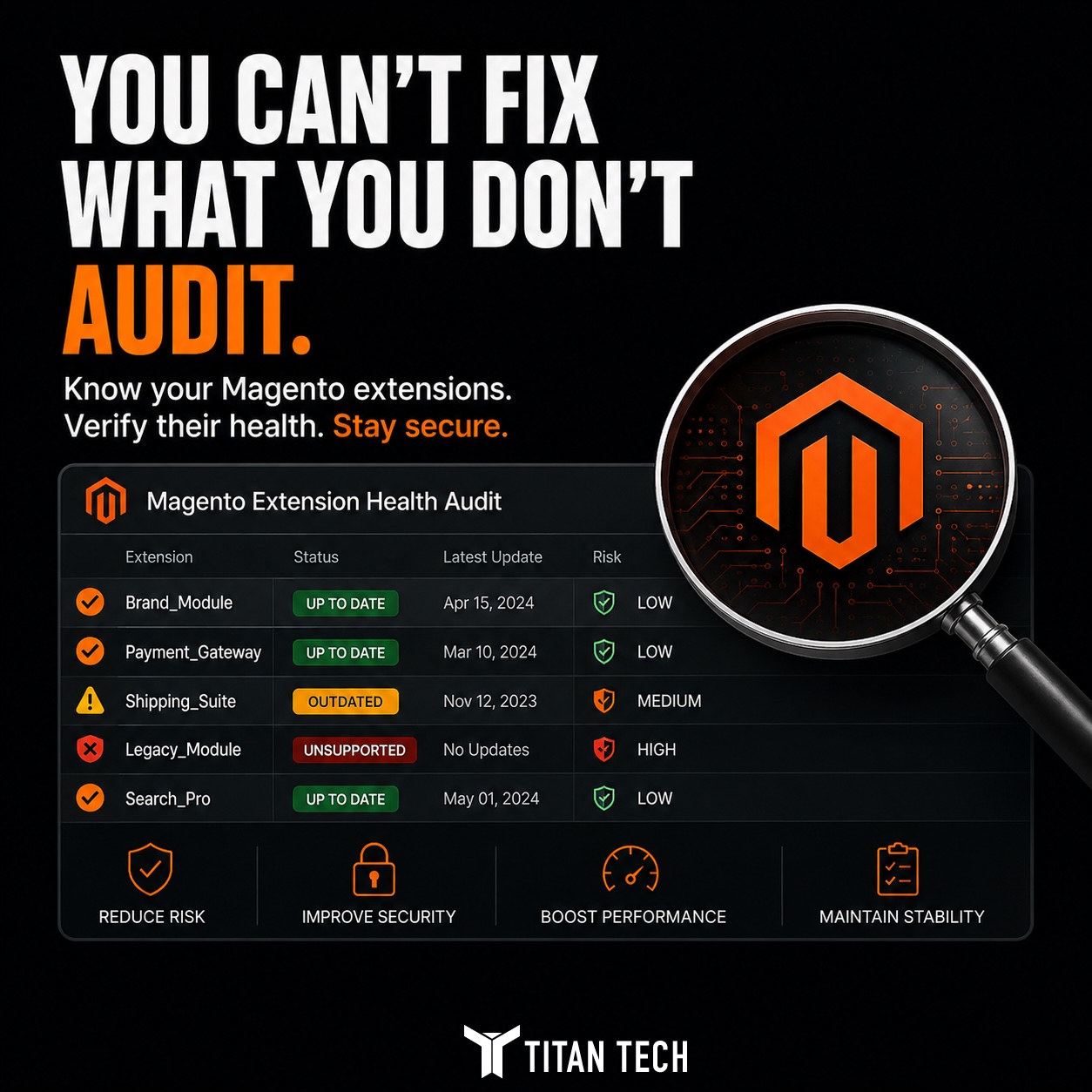
Auditing Magento Extension Health and Update Status
Third-party extensions run with core privileges but update on the vendor's schedule. Use Composer to find outdated, vulnerable, and upgrade-blocking packages.

Spotting Abandoned Magento Modules Before Outages
Abandoned custom modules keep running until an upgrade or traffic spike breaks them. Here is how to find them in config, git history, and setup_module.

Magento 2 Core File Integrity Checks on 2.4.x
Magento 2 has no built-in checksum tool. Here is the diff-against-clean-install method we use to catch hand-edited vendor code during an audit.
Dealing with an active platform issue? Start with an audit.
Insights can guide planning, but forensic analysis is the fastest path to root-cause clarity when revenue or stability is already being affected.