Magento
engineering
notes




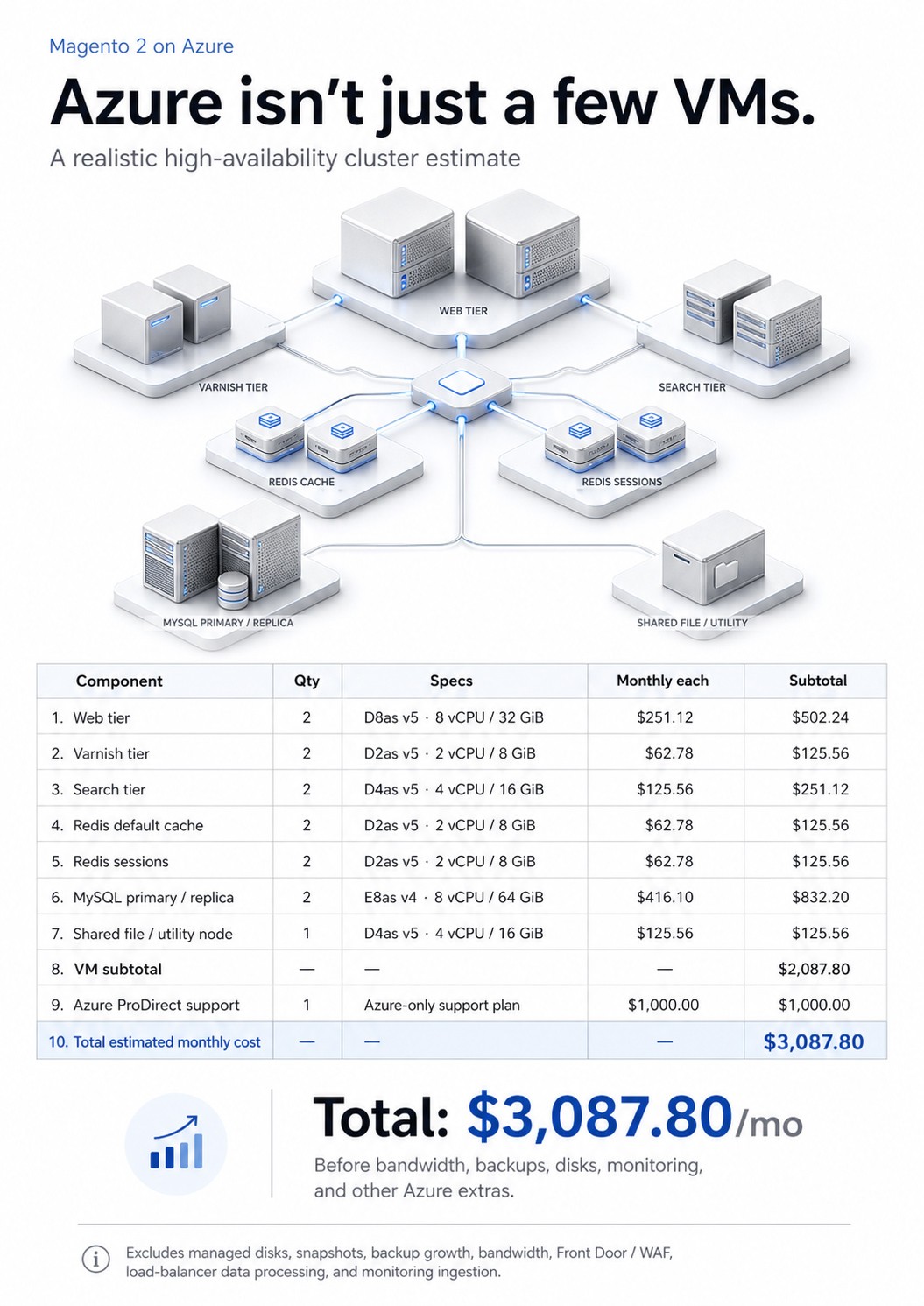
Should you move a Magento 2 store from Nexcess to Microsoft Azure?
Azure can run Magento. The question is whether replacing a stable, Magento-focused managed environment improves cost, ownership, and operational risk.
Not sure which platform risks deserve attention first?
Answer 15 operational questions and get separate risk and evidence-confidence scores, seven domain results, and a prioritized list of what to verify next. No email is required.
Check your platform healthThe index
All 86 articles, newest first. Pick a topic to narrow the list.
Security & Module Risk
Technical insight on Magento Admin ACL behavior, custom module exposure, extension risk, and authorization boundaries that affect platform security.
Open the Security & Module Risk page
Signals of Technical Debt in a Mature Magento Store
Mature Magento stores accumulate debt with recognizable signals across code, database, logs, and frontend. Here is how to read the pattern and act on it.
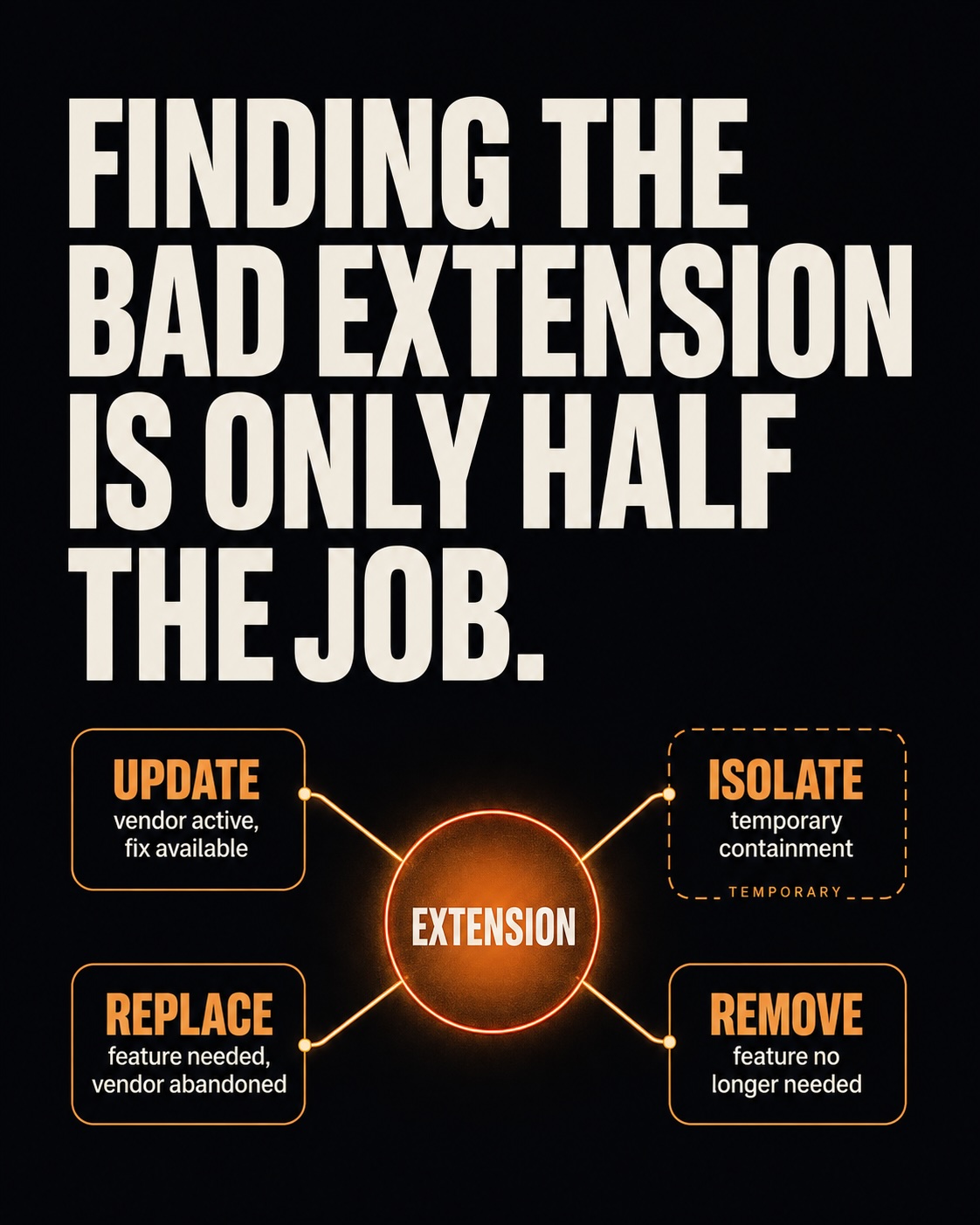
When to Replace, Isolate, or Remove an Extension
Finding a bad extension is half the work. Here is the framework for deciding whether to update, replace, isolate, or remove it, by need and risk.
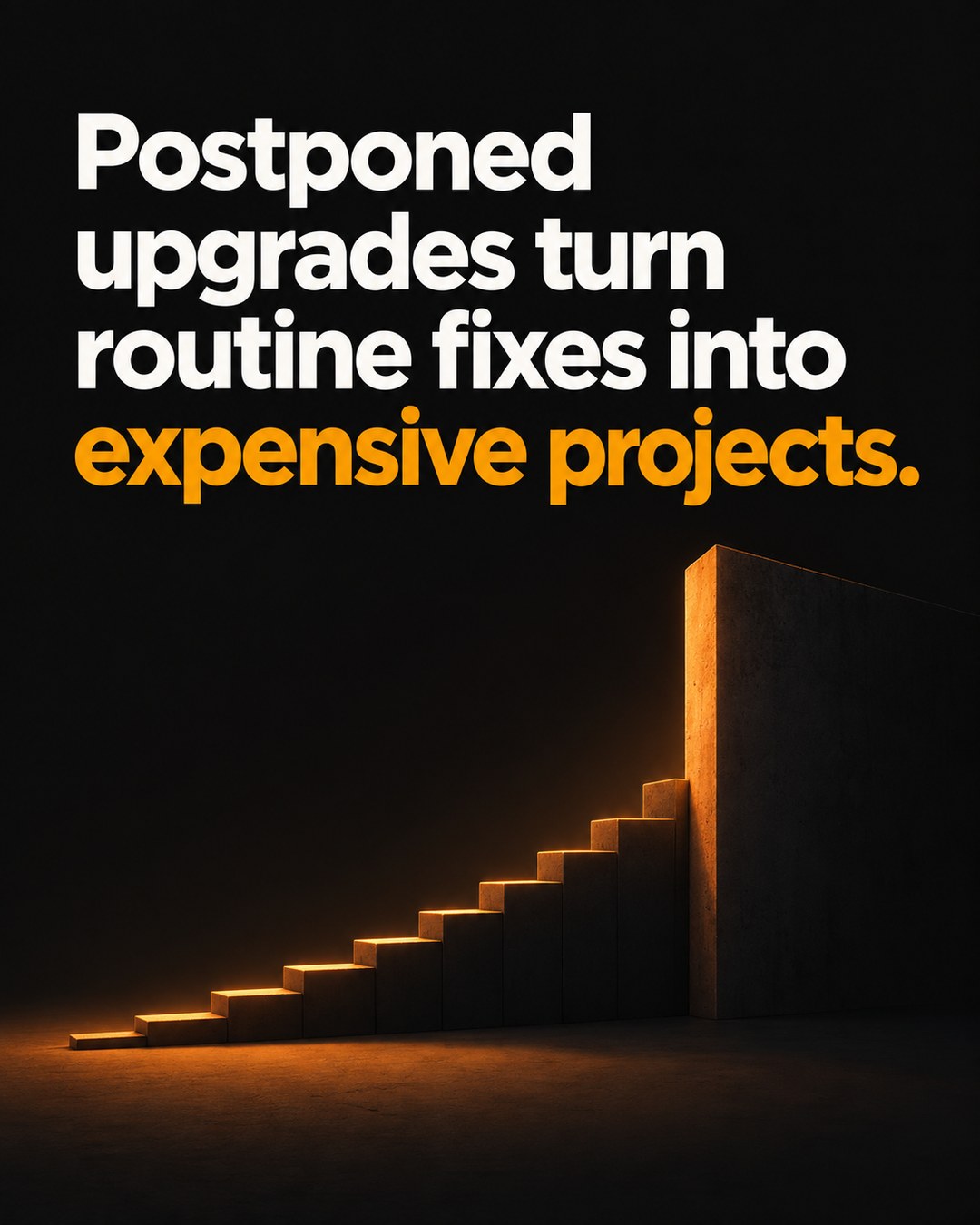
Magento Upgrade and Patch Readiness as Practice
Upgrades hurt most when they are rare. Here are the update types, the tools that predict what breaks, and the readiness practice that keeps a store current.
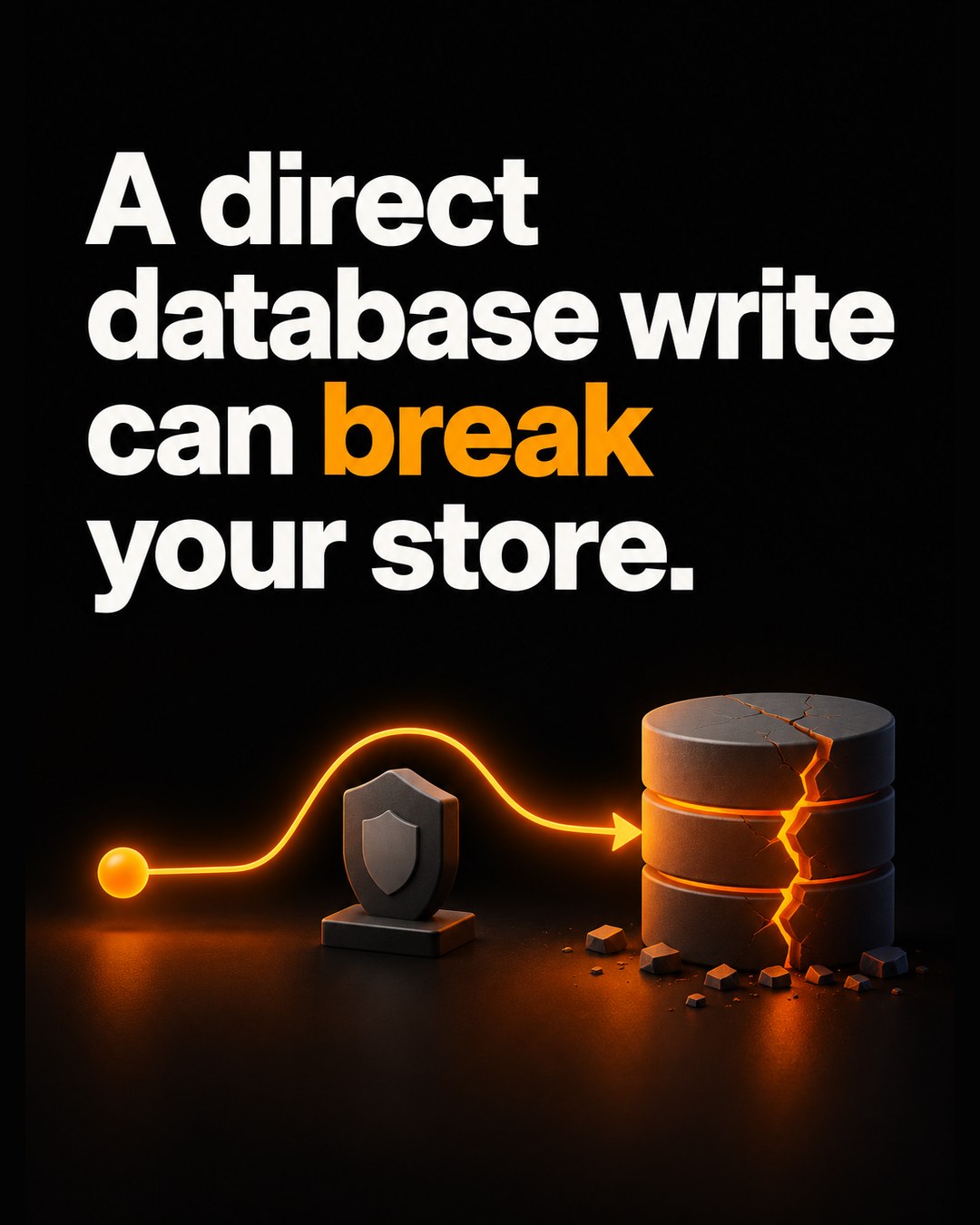
Unsafe Direct Database Writes in Custom Modules
Custom code that writes raw SQL to core tables skips validation, indexing, and cache, and can open injection. Here is how to find it and the right approach.

Ranking Magento Technical Debt by Real Cost
You cannot fix every module at once, so you rank them. Here is how to inventory Magento modules and score them by upgrade risk, blast radius, and support cost.

Extensions That Rewrite Core or Stack Around-Plugins
Class rewrites and around-plugins couple extensions to core internals and break on upgrades. Here is how to find them and build a coupling risk inventory.

Reducing Magento Extension Footprint Safely
Most stores can shrink their extension count without losing a feature customers use. Here is how to find the removable ones and take them out safely.

Module Dependency Conflicts Revealed by Composer
When Composer refuses to install, it found a dependency conflict. Here is how to read it, the commands that reveal it, and why forcing past it is a trap.

Registration Spam and Bot Load as a Health Issue
Bot registrations, spam carts, and card testing add load, bloat tables, and skew data. Here is how bot abuse hurts platform health and how to reduce it.

When Magento Module Count Becomes a Risk
The risk is not one extension, it is the count. Here is how module count turns into slow compilation, long plugin chains, and conflicts, and how to reduce it.

Magento Security Health: Outdated and Vulnerable Parts
Most breaches use disclosed, patchable vulnerabilities nobody applied. Here is how to check Magento, extensions, and PHP for known risk and rank the fixes.

Custom Code Without Service Contracts or DI
Custom code that ignores service contracts and dependency injection ages badly: fragile on upgrades and hard to test. Here is how to recognize it in a review.

Preference vs Plugin vs Observer in Magento 2
Preference, plugin, or observer: the mechanism a custom module picks decides its upgrade cost. Here is when each is right and the anti-patterns we audit for.

Magento 2 security: verifying ACL protection in custom Admin modules
A custom Magento Admin module is not secure merely because it declares an ACL resource. Sensitive backend access must be tested against restricted roles and validated after deployment.
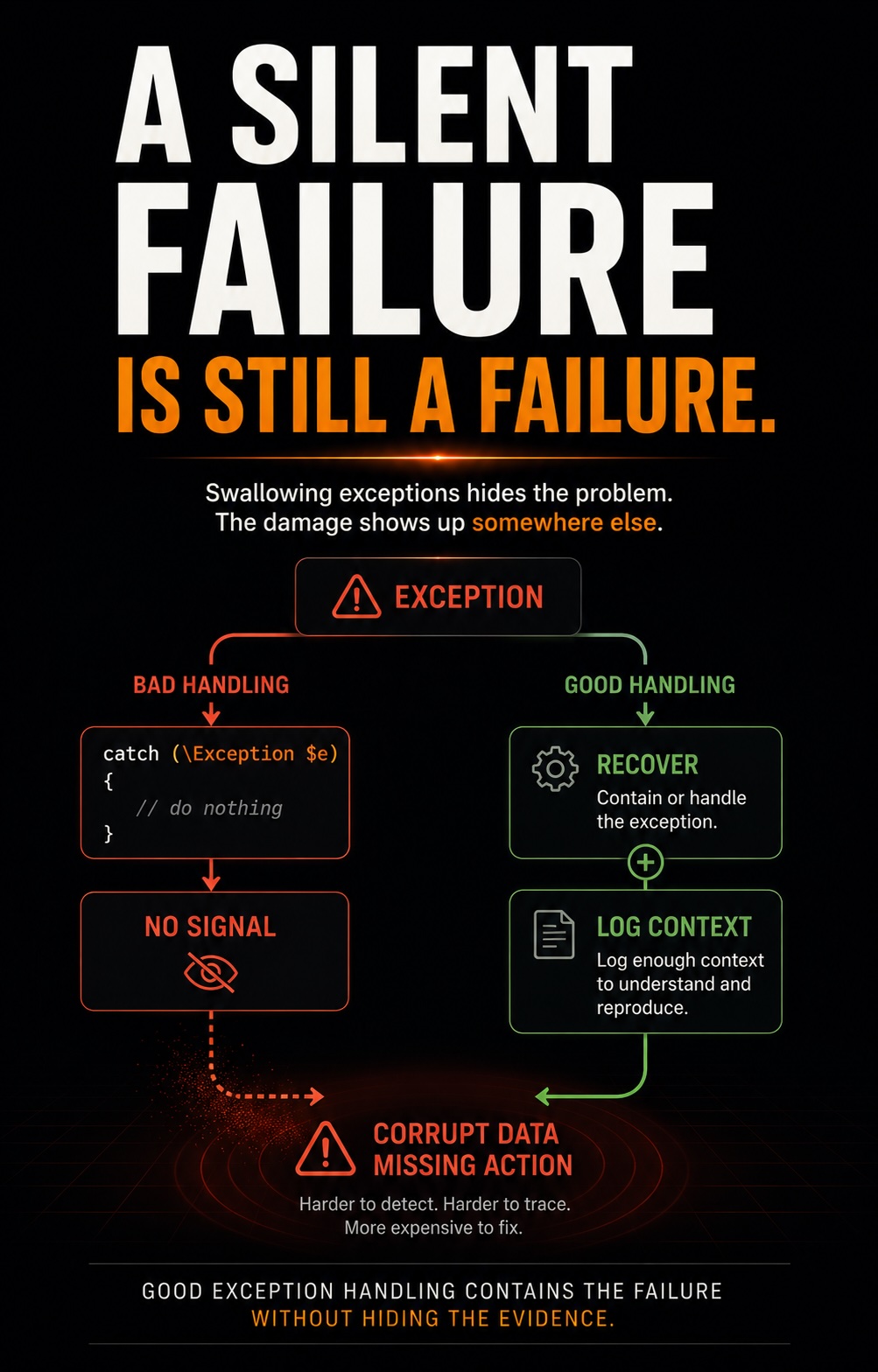
Exception Handling in Custom Magento Logic
Custom code that swallows exceptions or crashes the wrong flow turns small problems into big ones. Here are the common mistakes and how to spot them.
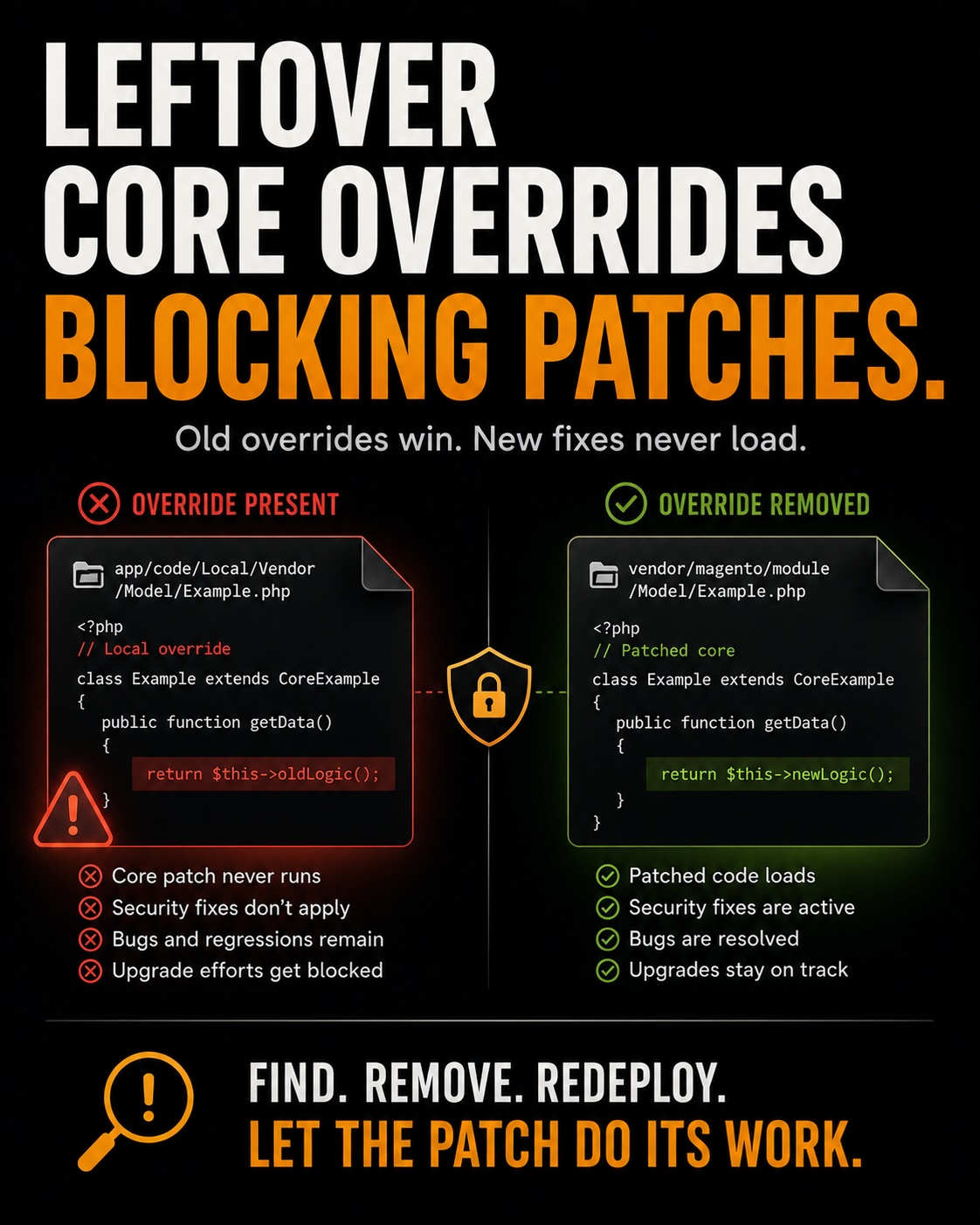
Core Overrides That Block Security Patches
A patch you applied may not protect you if an override runs instead of the fixed code. Here is how overrides neutralize patches and how to verify coverage.
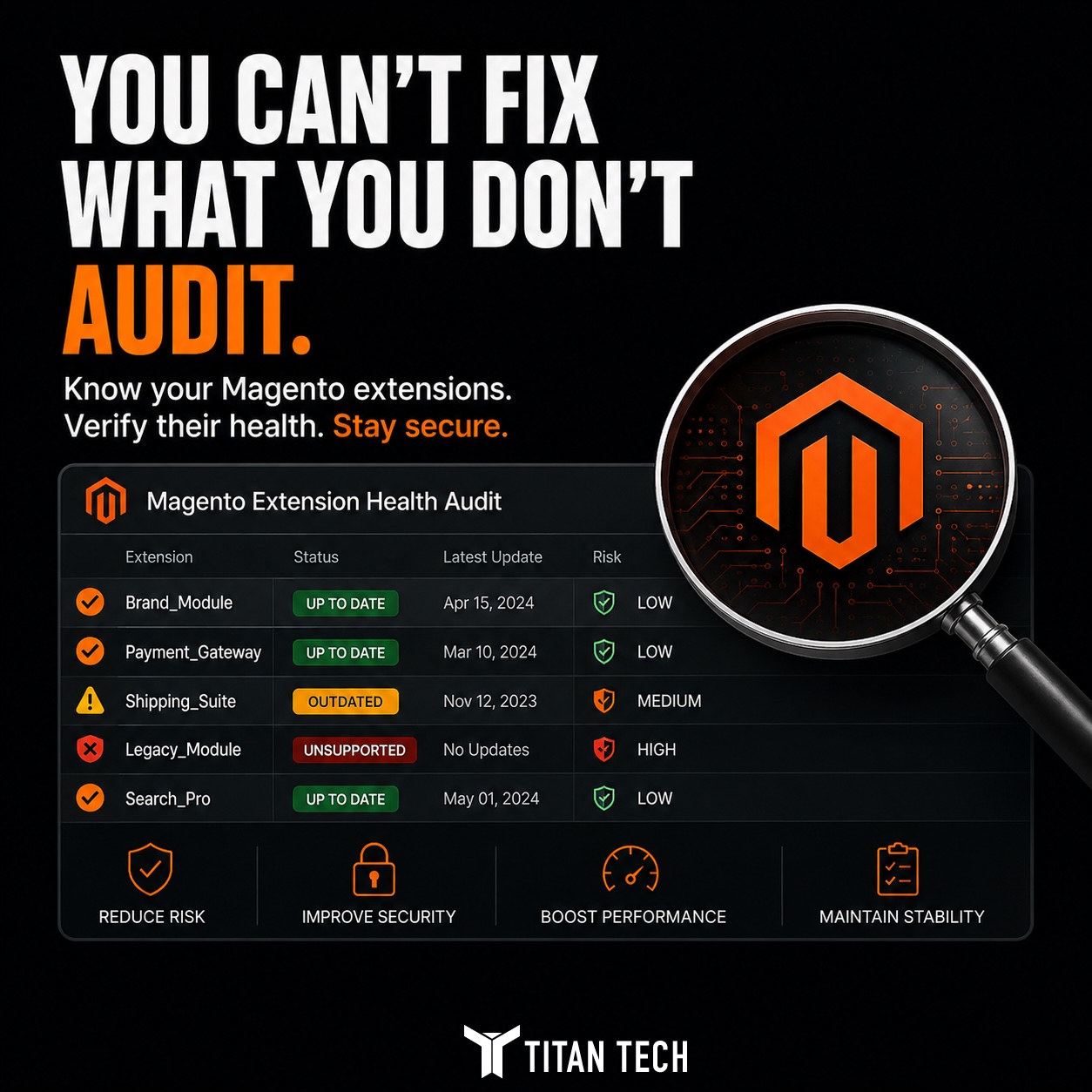
Auditing Magento Extension Health and Update Status
Third-party extensions run with core privileges but update on the vendor's schedule. Use Composer to find outdated, vulnerable, and upgrade-blocking packages.

Spotting Abandoned Magento Modules Before Outages
Abandoned custom modules keep running until an upgrade or traffic spike breaks them. Here is how to find them in config, git history, and setup_module.
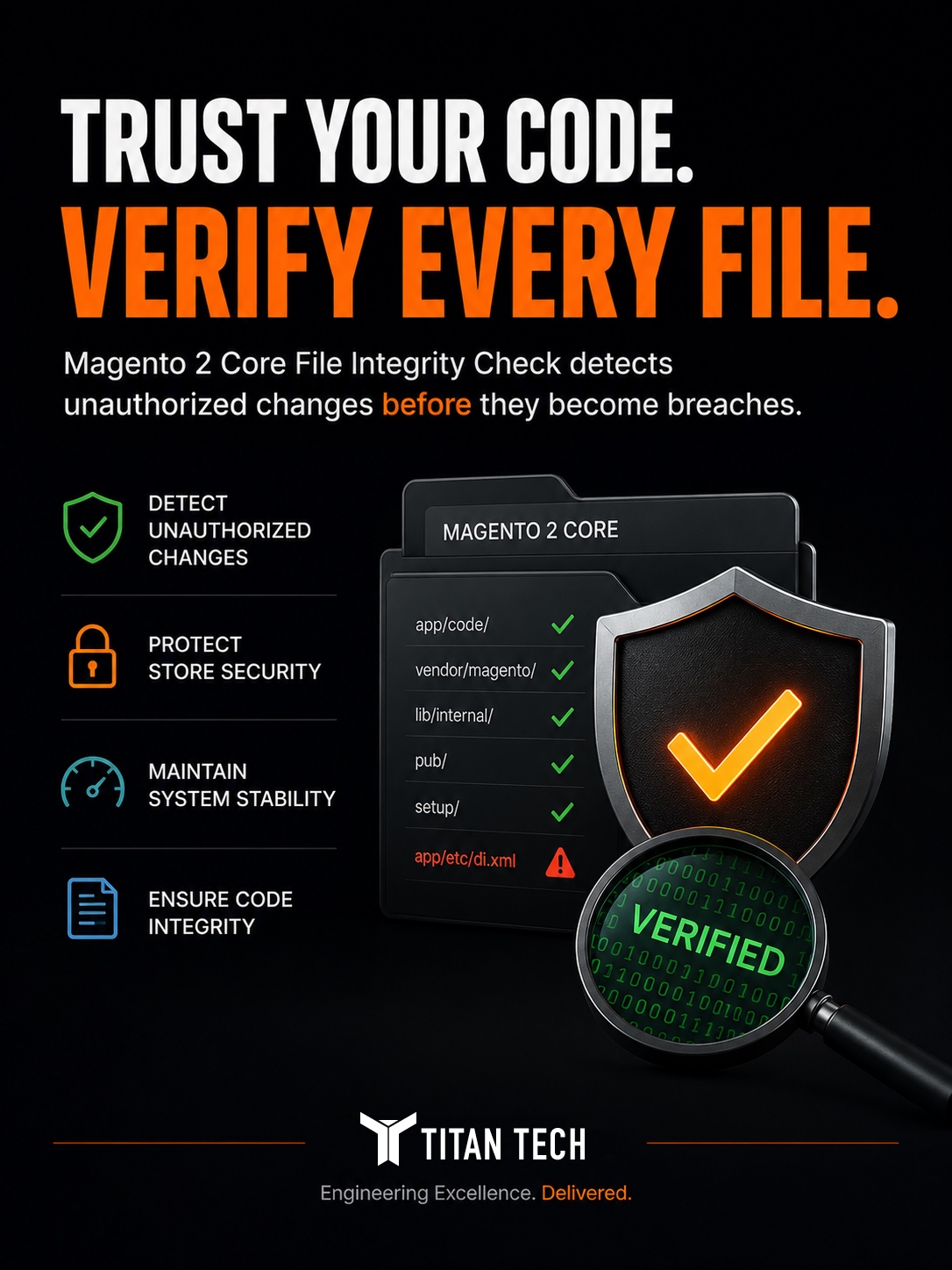
Magento 2 Core File Integrity Checks on 2.4.x
Magento 2 has no built-in checksum tool. Here is the diff-against-clean-install method we use to catch hand-edited vendor code during an audit.
Dealing with an active platform issue? Start with an audit.
Insights can guide planning, but forensic analysis is the fastest path to root-cause clarity when revenue or stability is already being affected.